SafeAudio, you probably already heard about it. It's the music industries latest technology to make sure they will get their money from the public.
I've never seen a industry that is so keen on money and tries in any way to protect it's products so desperately. Since they have stopped Napster they are disliked by more and more people, but they don't seem to care.
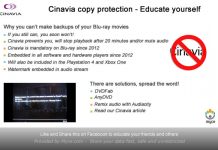
Macrovision
SafeAudio is an Audio CD protection developed by Macrovision. This Californian company has become famous by their VHS and CD (SafeDisc) protections. Both have been cracked, but do what they are designed for, protect the contents of media, or at least make it as difficult as possible to duplicate it. Of course most of the CD Freaks visitors are able to bypass the protections, but the average home user will not.
Altough SafeAudio is rather easy to bypass I think Macrovision can already market it as a success as it seems a lot of record companies have adopted the technology. Soon Macrovision will publish their results and I'm very curious how much they've made this year.
Think about this, Macrovision only excists because there are people like us that like to backup their music. Thinking of that, they should very happy with us .
Watermarking ?
A technology to prevent consumers from backing up is watermarking, this means that the digital signal of audio will contain a signal that marks it as an copy. SafeAudio does not work this way. Watermarking is controversial as in tests good ears could say whether an audio track was marked or not, thus the quality of the audio was degraded.
SafeAudio protects a CD only from ripping. This means that converting your CD to MP3/WMA files should be impossible. Stupid of course, as there are MP3 players on the market, just like a walk/disc man that you can carry around and for those you NEED to convert your CD's.
The technology
So SafeAudio is no watermark, but does protect the contents of a CD from ripping, what's the trick ?
Macrovision likes to use the CD standards to it's limit's as it does with SafeDisc 2, also SafeAudio has some tricks to fool your CD player.
During the production of SafeAudio, the production plant will change some of the error correction data of the CD. Error correction is besides the actual content very important for a CD. The smallest scratch or piece of dust will create gaps in the music but your CD player is able, due error correction methods, to replace these gaps with the actual music and you won't notice your CD player is doing it !
SafeAudio changes the so called EFM code on the CD. Easily said; EFM code makes sure the CD can be played in normal conditions, it is part of the error correction system that is used on audio CD's. Errors in (this)data can easily be repaired by a CD player in both your hifi set as your computer when playing audio CD's.
If you want to rip this data however - (transfering it to your HD)- these errors will not be corrected by your HD as only a CD player know how to do this, resulting in gaps and bad noises in the audio.
Macrovision and TTR (that started developing this technology) say that the error corrections that are done while you play a CD in your normal CD player/computer can not be heard, for now there is no reason to believe they are wrong.
The main questions rises, can we bypass it ?
Now you know how it works, you probably will understand that you can just record the audio stream and burn it on a CD. Many people however don't think that is the best solution.
The best way to 'rip' (extract the audio to your HD) an audio CD is the direct way.
Burst Copy Mode
Recently someone reported to our site that there is software that is able to rip SafeAudio protected CD's very easy. Reported is that all software that is able to rip at Burst Copy Mode (In this mode the drive tries to write to the file while we read from the CD so we have a continue data stream) is able to rip SafeAudio protected CD's.
CDFS.vxd
Software that is able to do that, and besides that is always very handy is a modified version of CDFS.vxd. (Download here) Before installing this new windows CD-ROM driver you should think about 2 things:
It does not work for Windows NT/2K/XP and with all CD-ROM players
Make sure you have a backup of your original CDFS.vxd file (or just rename the old one to CDFS.old)
You can find the CDFS.vxd file that has to be replaced in the folder:
C:WindowsSystemIOSubSys
If you have succesfully copied the file, you need to restart your computer so the file can be loaded in the OS.
If all went well you can now open your Windows Explorer, and when you have a Audio CD in your drive it will show you all kinds of maps with choices of wav files. You can now pick the file you want and drag it to a folder on your HD !
Note: This software has not been developed by us and has already been on the internet for years. It does nothing more then recording the sound digitally, and does not crack/hack the protection, it just makes the protection useless.
By dragging and dropping all the files to your HD you have a very easy to use way of making a backup of SafeAudio protected CD's, and damn what will those Macrovision guys feel bad, we did nothing illegally, but their protection is useless now !
Try other software
If you want to use other software go ahead, and let us know your experiences !
So is SafeAudio to fear ? Let's go to the conclusion...
SafeAudio should not be feared, it's main goal is to protect Audio CD's from being ripped by software. It's very likely SafeAudio will be used on lot's of CD's. The technology is relatively easy to implent and does not need special expensive hardware. It does it's protection probably good enough to stop home users and SafeAudio seems to be another succesfull technology by Macrovision.
Future
We are at the moment able to rip Audio files by using for e.g. CDFS.vxd, but it could be that Macrovision will upgrade SafeAudio as they did with SafeDisc. SafeDisc has always been a pain in the ass, but as time passed by they improved it over and over again making it even more difficult to backup your beloved CD's.
Record companies that decide to use SafeAudio do forget one thing, MP3 is populair, trying to stop consumers from using this format is something they don't like. Also there are MP3 players on the market, for this people are allowed to rip their CD's and convert them to MP3. SafeAudio tends to stop them from doing this.
Well anyways, I'm very curious how this protection will evolve, and I hope they will at least have the decency to put stickers on the Albums that are protected this way.