
The march of time has had a significant effect on computing technology with some of today's smart phones more powerful than early supercomputers.
Despite progressive technological leaps, Moore's Law (with a few minor adjustments) has continued to approximate the rate of progress with technologists so far managing to surpass the technological barriers placed in their way.
These days certain fundamental barriers are being approached causing many to cast doubt on the ability of Moore's Law to continue to predict future progress, with some asserting that this particular rule has finally 'had its day'.
However, just when it all seems that they might be right, the 'Orbital Angular Momentum Micro-Laser' now enters the game (OAMML). So what's that then?
Remarkably, scientists have not only found a way to create corkscrews of light, but have also further managed to shrink the usually bulky equipment required to generate the vortices down to the micro scale, at the level where it can be integrated into computing devices. The consequences of this are huge and have massive implications for the transport of data and computing in general. Because of the helical nature of the laser, data can be tiered and stacked effectively enabling more signals to be simultaneously transmitted than can be achieved through existing multiplexing techniques alone, such as 'wavelength division multiplexing' and 'time division multiplexing'.
Consequentially the amount of data transferred can be increased significantly, with the OAMML laser able to carry ten times more data than a linear beam, effectively increasing the rate of data transmission tenfold.
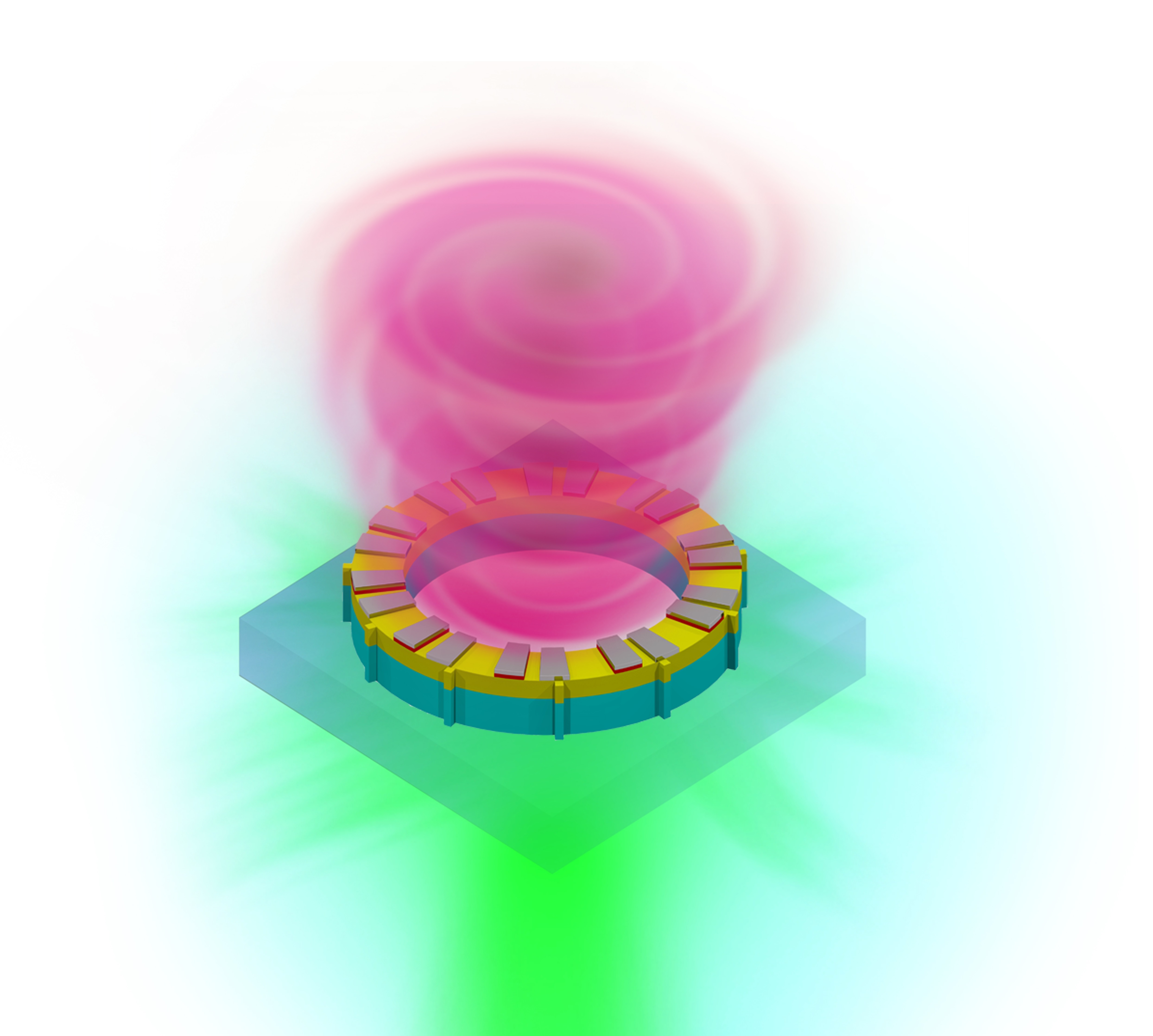
The future is indeed bright but now it's also helical!
Further information about this technology is available from the University at Buffalo here.