 |
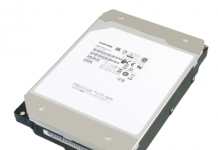
Review: Toshiba PX02SMF020 12GB/s 200GB Enterprise |
A few months ago we reviewed the Toshiba PX02SMF020 SAS Enterprise
SSD in its 6Gb/s form – Toshiba
PX02SMF020 6Gb/s. We are delighted that we are now able to review the same
drive in its 12 Gb/s form.
We are also delighted to confirm that the myce.com/blog OakGate
Test Unit has been upgraded to support SAS 12 Gb/s drives.
I must give some thanks:
Firstly, a big thank you to LSI
for providing a new LSI 9300-8e HBA to support SAS 12 Gb/s.
Secondly, a big thank you to OakGate
Technology for providing a new external Mini SAS HD to 4 x SAS connector and
for the excellent support provided during the upgrade process.
On page 3 we outline what SAS 3 brings and profile the LSI
9300-8e HBA.
The PX02SM series uses Toshiba’s own 24nm eMLC NAND, with
56GB set aside for use by the controller.
Market Positioning and Specification
Market Positioning
This is how Toshiba positioned the PX02 series, at the time
of its launch in August 2012 –
Toshiba’s Storage Products Business Unit, today announced
it is expanding its enterprise SSD family with the PX-Series, featuring three
models targeted for various enterprise applications: boot, read-intensive,
entry level servers; entry-to-mid-range applications servers; and
high-performance enterprise application servers. The PX-Series reflects
Toshiba’s continued storage innovation and coincides with the company’s
celebration of its 25th anniversary as the inventor of NAND flash
technology. Each model is optimised for its target segment with NAND flash
processes, capacity and interface support.
Read-Intensive/Boot
Server: Targeted at entry-level server applications, the PX03AN
series is Toshiba’s first eSSD family using 19nm cMLC (consumer multi-level
cell) NAND flash in capacities of 55/120/240/480 GB. Utilising the 7mm 2.5in
form factor, the PX03AN series drives also offer power-loss protection.
These three new products
further underscore the breadth of Toshiba’s storage products, both SSDs and
HDDs for mobile and enterprise markets, giving customers a ‘one-stop shop’
capability for their storage design needs.
And here’s the established
marketing approach –
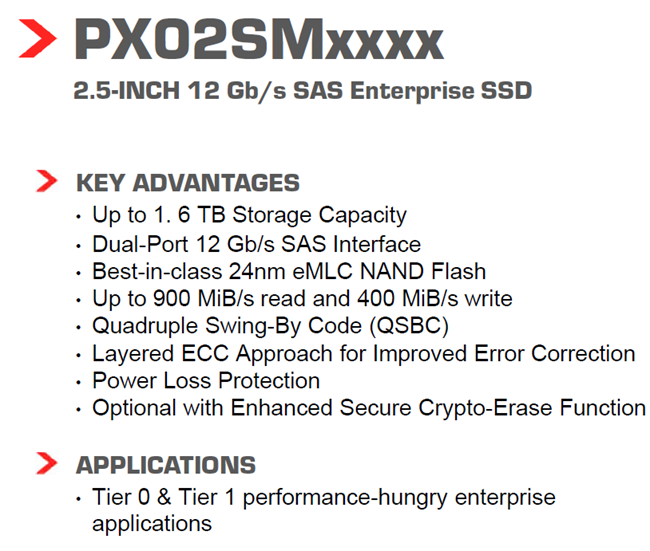
This mentions the intriguingly named ‘Quadruple Swing-By
Code’ (QSBC). I understand that QSBC is a strong and highly efficient Error
Correction Code (ECC) protecting against any read errors with the device.
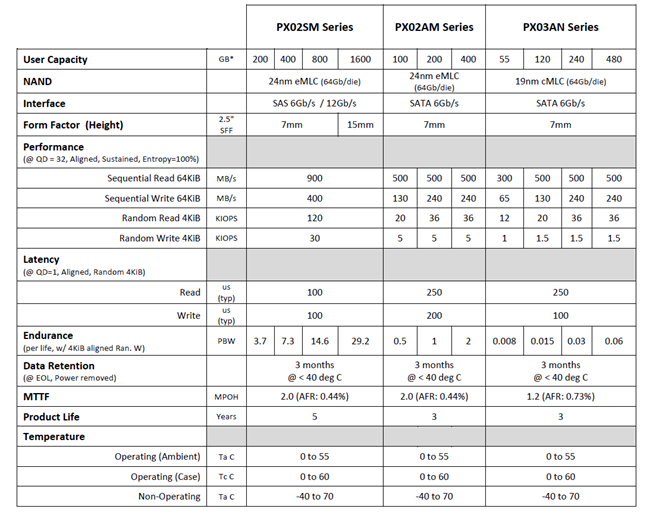
Specification
Here is Toshiba’s specification for the PX02SM, PX02AM, and
PX03AN series –
Toshiba has very recently announced the PX02SSX (12 Gb/s)
series of drives which offers improved IOPS performance and improved endurance
– please click here
for further information. We hope to test an example later this year.
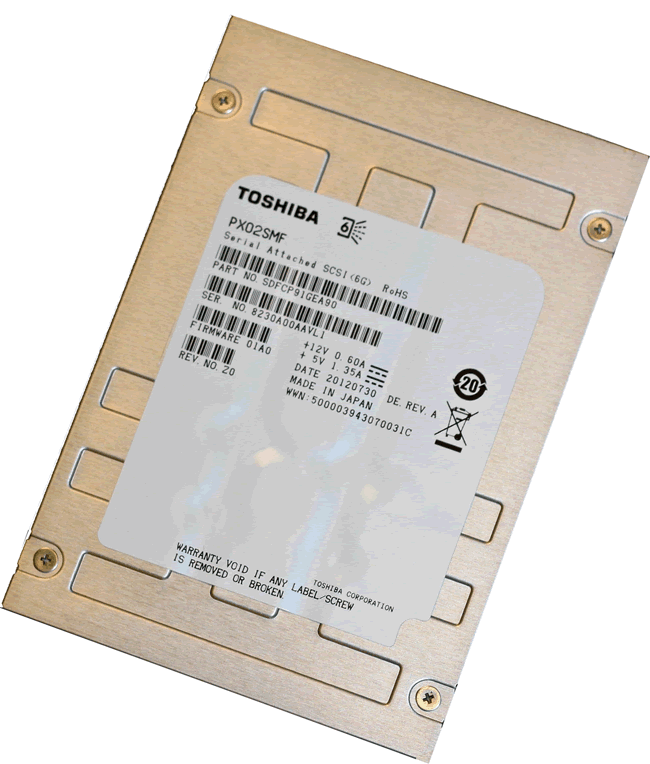
Product Image
Here is a picture of the Toshiba PX02SMF020 12Gb/s –
Now let's head to the next page, to look at Myce’s
Enterprise Testing Methodology.....
Please click
here
to view or download a detailed introduction to Myce’s Enterprise Class Solid
State Storage (‘SSS’) Testing Methodology as a PDF.
Put briefly:
All testing is performed on an OakGate Technology test unit
We perform two sets of Performance Tests:
- A full set of the mandatory Storage Network Industry
Association’s (‘SNIA’) tests as specified in their Solid State Storage
Performance Test Specification Enterprise V1.0 – SNIA
SSS PTS Version 1.0. - A set of tests, known as the ‘Myce/OakGate Full
Characterisation Test Set’, that provides readers with a fuller
characterisation of the solution.
We also review other important factors such as Power
Consumption, Data Reliability and Failover features.
A word about SNIA testing – before striking a partnership
with OakGate Technology I spent some time researching how I might implement
SNIA testing using freely available tools such as IOMeter and FIO. I arrived
at the conclusion that whilst it was theoretically possible it was
impractical. The reason for this is as without the automation offered by a
test bench, such as the OakGate Unit, the only way to meet the SSS PTS requirements
is to run the maximum number of test cycles and then to manually look back at
the results to determine when/if steady state has been achieved in the workload
specific test cycle, and then harvest the data from the qualifying Measurement
Window. This means that the test runs would always take a maximum elapsed time,
and there would be a great deal of human effort required to review, gather, and
report upon the data. I empathise with, acknowledge, and respect the efforts
of other reviewers who endeavour to meet the SNIA’s principles in their testing
- I am privileged and thankful to be able to use a superb test bench which
automates the whole process and allows me to meet the SNIA’s specification in
full.
Before we move on, let’s remind ourselves of some basics –
When reviewing the performance of an SSS solution there are
three basic metrics that we look at:
1. IOPS – the number of
Input/Output Operations per Second
2. Bandwidth – the number of
bytes transferred per second (usually measured in Megabytes per second, ‘MB/s’)
3. Latency – the amount of time
each IO request will take to complete (usually, in the context of SSS
solutions, measured in Microseconds, which are millionths of a second).
It is true to say that IOPS and Bandwidth had all been
growing rapidly before the advent of SSS solutions, but Latency can only be significantly
decreased by eliminating mechanical devices, and thus Latency is the single
most important aspect that SSS solutions deliver to enhance performance.
Latency in a technical environment is synonymous with delay.
In the context of an SSS solution it is the amount of time between an IO
request being made, and when the request is serviced.
Bandwidth, also commonly referred to as ‘Throughput’, is the
amount of data that can be transferred from a storage device to a host, in a
given amount of time. In the context of SSS solutions it is typically measured
in Megabytes per second (MB/s).
A great enterprise SSS solution
offers an effective balance of all three metrics. High IOPS and Bandwidth is
simply not enough if Latency (the delay in an IO operation) is too high. As we
will see in the test results presented below, as Latency increases IOPS will
inevitably decrease.
Queue Depth is the average amount
of IO requests outstanding. If you are running an application and the Average
Queue Depth is one or higher and CPU utilisation is low, then the application’s
performance is most probably suffering from a ‘Storage Bottleneck’.
Another important factor to
remember is that SSS performance is influenced by previous workloads, not just
the current workload, and especially by what has previously been written to the
drive. As specified in the SNIA SSS PTS the goal of all good Enterprise level
testing is to provide consistent circumstances, so that results can be compared
fairly across different SSS solutions – it is for this reason that all of our
tests start with a purge of the drive, so that it starts in a ‘Fresh Out of the
Box’ (FOB) state. Most tests then have a pre-conditioning phase where the
drive is put into a ‘Steady State’ before the test phase begins. Put briefly, a
‘Steady State’ is achieved when the performance of the drive no longer varies
over time and settles into a consistent level of performance for the workload
in hand. You can find a detailed explanation of ‘Steady State’ and how it is
determined in the SNIA tests in our Enterprise Testing Methodology paper, which
can be viewed or downloaded as a PDF by clicking here.
For interest, here are some
generally accepted assumptions that differentiate the use and therefore the
approach to testing Enterprise/Server and Consumer/Client SSS solutions:
Enterprise/Server SSS
assumptions:
- The drive is always full
- The drive is being accessed 100% of the time (i.e. the
drive gets no idle time) - Failure is catastrophic for many users
- The Enterprise market chooses SSS solutions based on their
performance in steady state, and that steady state, full, and worst case
are not the same thing
Consumer/Client SSS
assumptions:
- The drive typically has less than 50% of its user space
occupied - The drive is accessed around 8 hours per day, 5 days per
week, and typically data is written far less frequently - Failure is catastrophic for a single user
- The consumer/client market generally chooses SSS solutions
based on their performance in the FOB state
Esther
Spanjer, Director, SSD Technical Marketing at Smart Storage Systems, said, 'I
am happy to commend Myce for their high level of professionalism and
cooperation during the review process', Ms. Spanjer added, 'I wish them every
success in their partnership with OakGate Technology and their initiative to
provide authoritative performance reviews for the Enterprise Solid State
Storage market'
Now let's head to the next page, to look at what SAS 3
and 12 Gb/s brings.....
SAS-3
Today’s fastest 6Gb/s SSDs (SAS-2 and SATA-3) are now
consistently achieving sequential performance benchmarks in the range of
500-560 MB/s – but no higher - this is because, once overheads are factored
in, it is the fastest throughput the interface will support (this is often
referred to as the bus being ‘saturated’).
The fourth generation of SAS (‘SAS-3’) brings a doubling of
the interface bandwidth to 12 Gb/s thus removing the interface bottleneck (or
at least moving it out for a while). To achieve a 12 Gb/s link it was also
necessary to significantly improve the signal quality through the physical link
to a drive. This is achieved by way of ‘transmitter training’, where an
attached receiver analyses an attached transmitter’s data signal and uses
command messages to adjust the transmitter’s settings. The new connectors also
allow for the same length of connectors as are available in SAS-2
implementations (10m for passive copper, 10-25m for active copper and 100m for
optical) to be used to be used in a SAS-3 implementation.
SAS-3 also provides backwards compatibility so that SAS-3
devices can be deployed in an SAS-2 infrastructure (albeit that they will run
at a maximum of 6 Gb/s).
Please note that a roadmap is available for the evolution of
SAS that predicts the availability of a 24 Gb/s bandwidth in 2017.
LSI 9300-8e HBA
This is how LSI positions its new family of LSI SAS 9300 SAS
12 Gb/s HBAs –
12Gb/s SAS HBAs doubles the SAS data rate from
previous generations providing high performance
Overview
The LSI SAS 9300 host bus
adapter family provides high performance for high-end servers connecting to
large scale storage enclosures and for internal drive connectivity in 1U/2U
servers and workstations. The SAS 9300 HBA family is based on the LSI SAS 3008
IO controller that integrates the latest enhancements in SAS and PCI Express
technology. The adapters can reach over 1 million IOPs from a single IOC.
The LSI SAS 9300 adapter
family supports 8 PCI Express® lanes that comply with the latest PCI Express 3.0 specification
with 8Gb/s per lane. Each host bus adapter also supports 8 or 4 individual SAS
ports operating at 12Gb/s. The adapters are backward compatible with previous
PCIe and SAS generations through automatic negotiation and provide SAS data
transfer rates of 12, 6, and 3Gb/s per lane, and SATA data transfer rates at 6
and 3Gb/s per lane. LSI provides a complete suite of industry standard
operating system drivers.